

Ozempic Face: What It Is, Why It Happens, and How to Improve the Appearance of Facial Volume Loss
Author Byline: Dr. Ben Johnson, Founder of Osmosis
Few aesthetic concerns generate as much frustration as the sudden, visible aging that can accompany GLP-1 medication use. The hollowed cheeks, sagging skin, and gaunt appearance often described as "Ozempic face" reflect deeper structural changes that deserve a clear explanation and a thoughtful path forward.
From the Osmosis perspective, GLP-1 class drugs, including Semaglutide (Ozempic, Wegovy, Rybelsus), Tirzepatide (Mounjaro, Zepbound), Liraglutide (Victoza, Saxenda), and others, are toxic to the liver, gastrointestinal tract, and other organs. Their method of action can induce gastroparesis, a slowing or near-halting of stomach function that can be permanent. GLP-1’s also starve the body of adequate nutrition. This starvation state triggers the body to break down its own tissue for fuel. The consequences extend well beyond the scale.
The facial changes associated with GLP-1 use stem specifically from the loss of structural fat pads. These fat pads sit beneath the skin of the cheeks, temples, and around the eyes and lips, providing the volume and contour that define a youthful appearance. They also provide the supportive lift of the butt, arms and breasts. When the body enters a prolonged starvation state, it depletes these essential fat reserves. The result is laxity, loose skin, and a more aged look not only in the face but throughout the body, including the extremities. Long-term metabolism is also affected because the significant muscle loss reduces the body's baseline caloric needs, making sustained weight management far more difficult once the medication is discontinued. In many cases, individuals never fully recover normal stomach function after stopping these drugs.
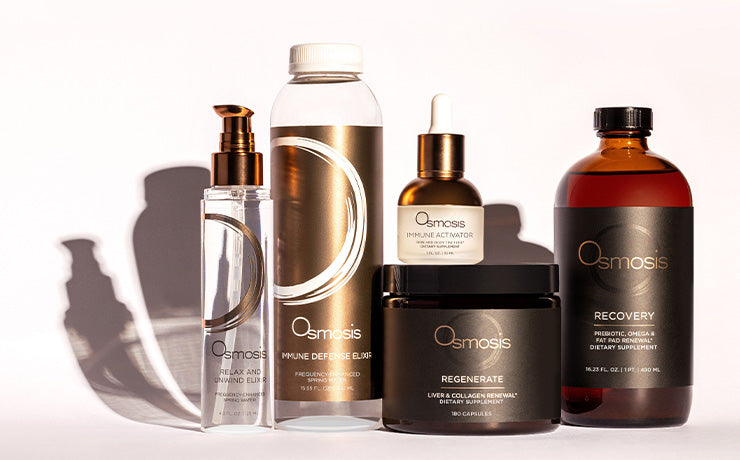
Osmosis offers a targeted, non-invasive solution for restoring the lost fat pads that define facial structure and body laxity. The protocol centers on one product: Osmosis Recovery. This patent-pending formulation is the only product indicated for fat pad volume loss, regardless of cause as long as the GLP-1 has been discontinued. Recovery is formulated with specific essential fatty acids found in the structural fat pads as well as fat-soluble vitamins that support the body's natural processes for rebuilding firm, youthful-looking skin and structural density. Recovery is taken at 1 tablespoon in the morning and 1 tablespoon in the evening, separated by approximately 12 hours. For those who prefer softgels, the equivalent dose of 1 tablespoon requires 14 gel caps per serving.
It is important to set realistic expectations. Recovery can restore the structural fat pads lost during GLP-1 use; however, restoring the significant muscle loss that accompanies these medications remains challenging. Because the body prioritizes muscle rebuilding after a prolonged starvation period, individuals may experience weight regain once the drug is stopped. Consistent use of Recovery over several months supports gradual, visible improvement in facial and body contour. According to Osmosis clinical understanding, timelines vary by individual; reassessment is typically appropriate after 14-16 weeks of consistent use.
A commitment to Recovery as part of a daily wellness routine helps you maintain structural balance and supports the restoration of a naturally fuller, more youthful appearance without injectable treatments. It also restores the microbiome through its prebiotic pathway.


